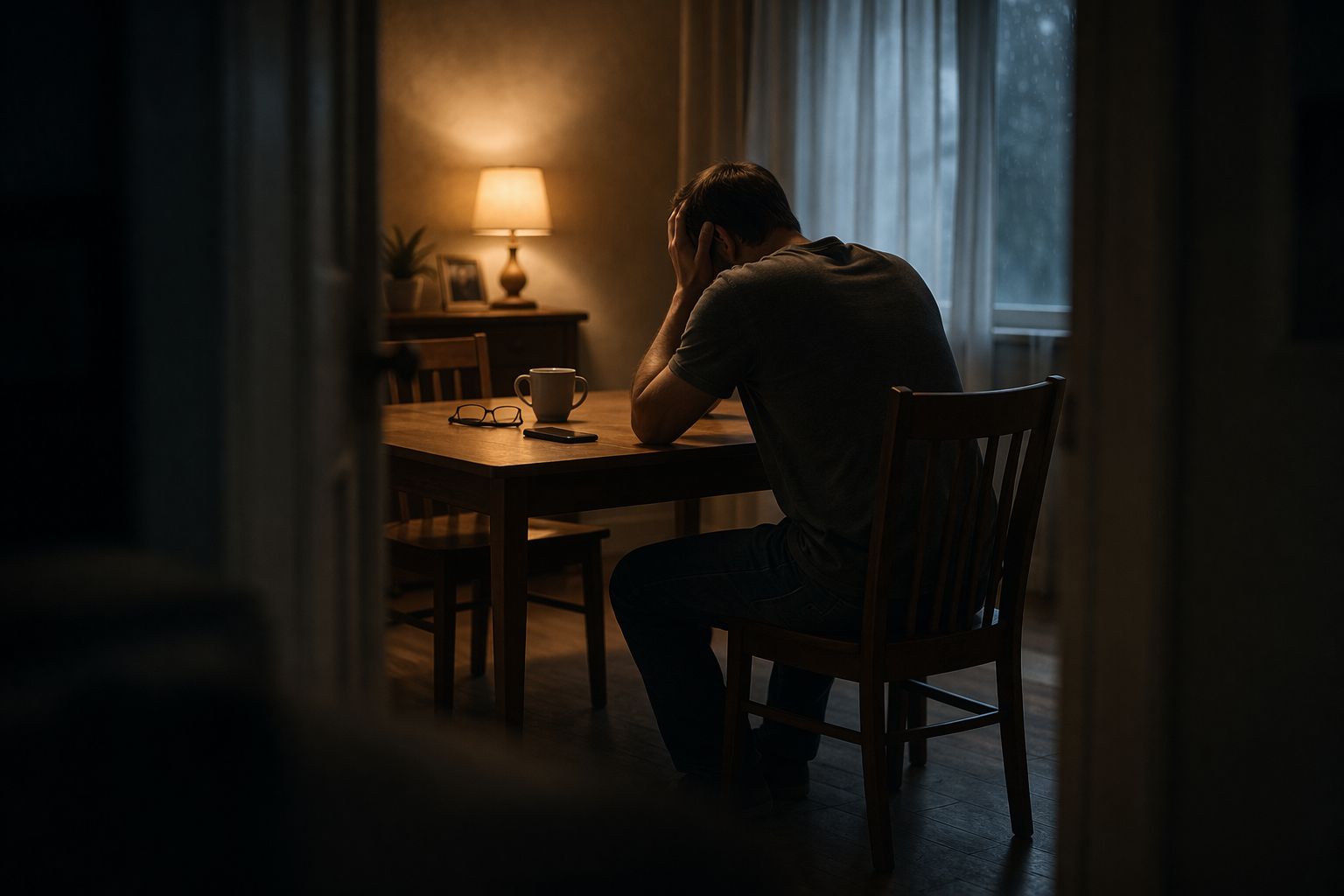
Last night in our grieving dads group, the topic was guilt.
That is something I struggle with every day since losing Alex.
My mind goes back over every moment and every decision. I think about all the ways I could have been better for him. I question how I missed the signs. I ask myself why I didn’t stop him from leaving the house. I wonder whether my response about school contributed. I knew something felt wrong that morning, and I still didn’t take action.
These thoughts live close to the surface for me. They are not hard to find. They are there every day.
As I listened to the other dads talk about their own guilt, I felt for every one of them. I could hear the pain in their voices. I could hear the weight they carry. But I could also hear something else. I could hear how much they loved their children. I could hear how hard they tried. I could hear that they were making the best decisions they could with what they knew at the time.
And while I understood their guilt, I did not blame them.
I felt no judgment toward them. Only compassion. Only understanding. Only grace.
One father shared a story about what happened a few nights before he lost his son. At the end of it, he summed up his pain with one sentence: “I told him no.”
But that is not what I heard.
What I heard was a father who showed up. A father who took the time to do something. Maybe it was not the exact thing his son asked for, but it was something that felt right to him in that moment. It was an act of care. It was an act of love. And yet, in his mind, the entire story had been reduced to: “I told him no.”
That stayed with me.
Because grief seems to do that. It takes a complicated, human moment and rewrites it into a simple accusation. It strips away the love, the context, and the impossible limitations of being human. It turns a father trying into a father failing.
And if I am honest, I do the same thing to myself.
So why is it so easy for us to punish ourselves while seeing others with such clarity?
Maybe it is because when we look at someone else’s story, we can see the whole person. We see a loving parent doing their best in a painful and imperfect moment. We do not hold them to an impossible standard. We do not expect them to have known the ending before it happened.
But when we look at ourselves, grief gives us hindsight and then calls it truth.
We replay moments with information we did not have at the time. We connect dots that only became visible after the loss. We turn uncertainty into responsibility. We turn heartbreak into blame.
Maybe self-blame can also feel easier than helplessness. If it was our fault, then maybe it was preventable. Maybe the world still makes sense. Maybe there was something we could have done to stay in control.
But grief does not work that way. Love does not give us perfect foresight. Being a parent does not make us all-knowing. And losing a child does not mean we failed them.
What I heard in that room last night was not a group of fathers who did not care enough. I heard a group of fathers who loved deeply and are now living with the terrible burden of wishing love could have been enough to change the outcome.
I do not write this because I have figured guilt out. I haven’t.
I write this because I am starting to see that the grace I so easily offer to other grieving dads may be the same grace I need to learn to offer myself.
And maybe that is part of the work of grief.
To tell the truth more gently.
To recognize that trying is not the same as failing.
To understand that love was present, even in the moments we now question.
To stop rewriting every painful memory into a verdict against ourselves.
If another father told my exact story, would I blame him or would I see a father who loved deeply, tried his best, and would do anything to go back and hold his child again.
I know the answer, and yet I still blame myself.
Maybe that is what guilt does in grief. It lets us see everyone else with compassion while holding ourselves to an impossible standard. It gives grace to others and withholds it from the person carrying the loss.
I do not write this because I have figured that out. I write it because I am living in that tension every day — knowing what is true, and still struggling to believe it for myself.
Discover more from Thoughts and Introspections
Subscribe to get the latest posts sent to your email.
No responses yet